The Road to Scarless: How Endoscopic Breast Reconstruction Was Built
From "using the endoscope as a lamp" to the West China Ports, the reverse-sequence method and day surgery — how a six-to-eight-hour operation became a two-hour one.
The IARC global cancer burden estimate for 2020 put new cancer cases worldwide at 19.29 million, of which breast cancer accounted for 2.26 million — more than lung cancer's 2.2 million. Breast cancer had replaced lung cancer as the most common cancer in the world.
The breast matters to a woman physiologically and psychologically. The classical radical operation removed the breast with a 20–25 cm incision and cleared the axillary nodes to reduce residual and metastatic disease. It worked, but it left the breast gone and the chest scarred — devastating on both counts. Secondary reconstruction was an option, at the cost of a second operation, its trauma and its expense.
As techniques advanced, patients began to ask for more than survival: they wanted their future intact, and both a physical and a psychological "minimally invasive" result. That put the demand on the surgeon.
"The difficulty forced us to find another way"
Members of the Party branch of the Breast Disease Centre at West China Hospital set out to change this — to keep oncological results and reduce complications while rebuilding a breast that looks untouched. They worked through the night for years.
"The breast has no cavity, so the endoscope struggles to get in and the view is limited. Later I used suspension and insufflation together and treated the scope as a light source, but it still was not ideal. One of my fellows joked that this was not endoscopic surgery at all — I was just using the scope as a lamp. The technique was not mature, and I could not even be sure whether it helped the patient or not: for a slightly better cosmetic result the patient was anaesthetised for five or six hours, the trauma was no less, and the wound was not fully hidden. I could not honestly claim the technique was worth it."
That was Professor Du Zhenggui's account of the early years. At the time, the approach had no acceptance among specialists, and many problems remained unsolved.
West China Port 1: from six to eight hours down to three or four
"In an operation in March 2020 it struck me: the view is limited once the scope is inside the breast — so why not make another, accessory port in the breast? That was the idea behind West China Port 1. It solves the instruments fighting each other during the operation and makes dissecting the lower inner quadrant far easier. It gave me more confidence to push towards a better operation."
The concept of West China Port 1 for endoscopic breast reconstruction was introduced on 26 March 2020. Reconstruction time fell from six to eight hours to three or four, accelerating scarless treatment at West China Hospital.
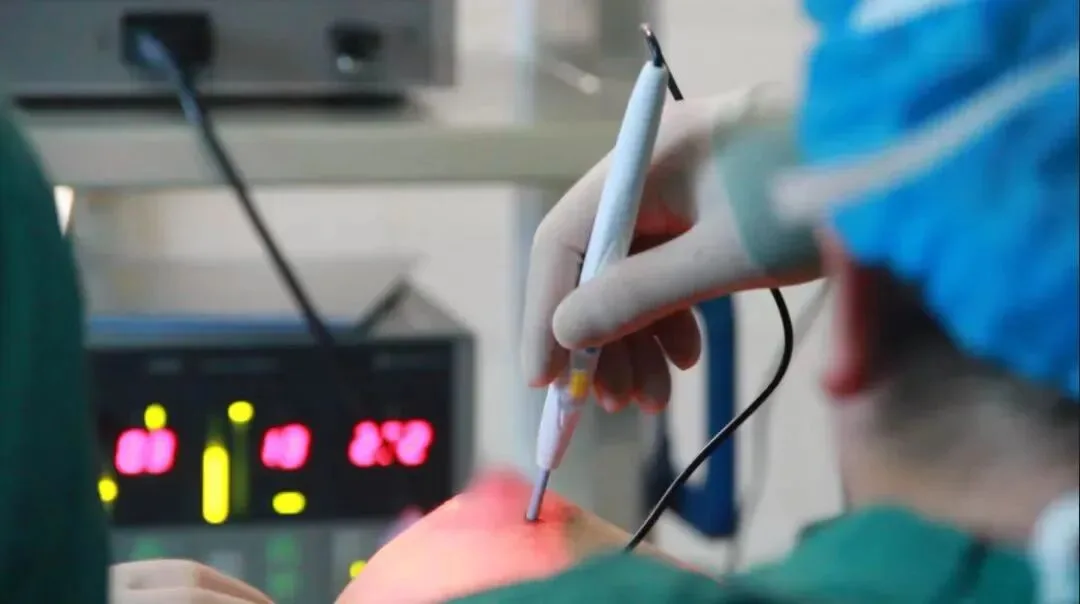
The reverse-sequence method: gas tension instead of retractors
"West China Port 1 solved the instruments colliding, but we still worked the classical way: free the subcutaneous plane and the retromammary space first, then create the implant pocket. Freeing the retromammary space is difficult — a lot of traction through a very small opening — so the operating time was still not where it should be, and it needed retractors of various shapes. I started thinking about how to do without them."
"If the breast can be insufflated, then the tension of the gas can lift the breast and the gland. There are really three planes in breast reconstruction. The traditional approach takes the top plane first; with insufflation the lower two planes are pushed down, so you have to take the bottom plane first instead. The middle plane sits against the pectoralis major, which has weight — the gas lifts the tissue above it, so that plane separates better too. The same for the top plane: the skin lifts, the gland drops under its own weight, and the problem is solved. No special retractors needed."
On 30 May 2020 Professor Du introduced the gas-cavity "West China reverse-sequence method" for nipple-sparing glandular resection, cutting endoscopic reconstruction time to around two hours — the point at which the technique began to mature.
Putting the mesh in through the armpit
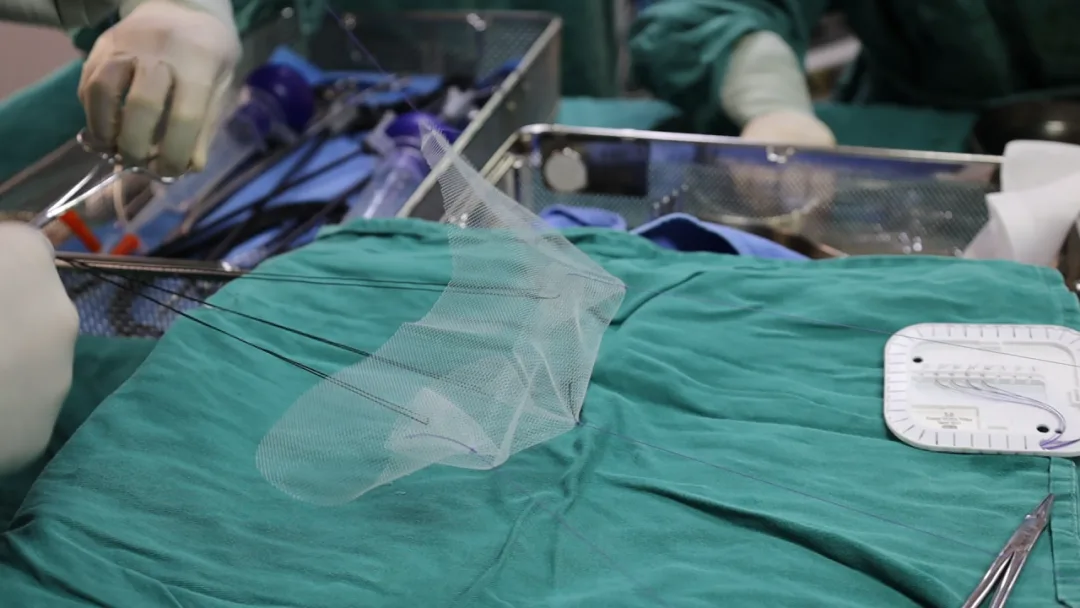
The aim was not only to treat the cancer but to leave a breast that is naturally symmetrical, and Professor Du kept refining: placing both the implant and the mesh into the pocket through the axillary incision, so the chest looks as good as it can after surgery. On 5 September 2020 he reported a case in which the mesh was inserted through the axillary incision, marking the technique's success. His own assessment:
"The patient was very satisfied, but in my view the result was still not ideal. I am still learning from it, looking for a better answer."
On 17 September 2020 he used his "West China traction-suture parachute method" to suture the mesh into the implant pocket through the axillary incision, and streamed the first genuine case using the technique nationwide. This made scarless reconstruction possible for patients with mild to moderate ptosis, widened the indications, and brought the technique to more women.
The team has since introduced West China Port 2, West China Port 3 and a three-directional traction-suture mesh technique, which simplify endoscopic latissimus dorsi reconstruction, endoscopic breast-conserving surgery and pre-pectoral implant reconstruction — rounding out the endoscopic repertoire. They also began performing endoscopic reconstruction as day surgery, reducing both burden and trauma for patients.
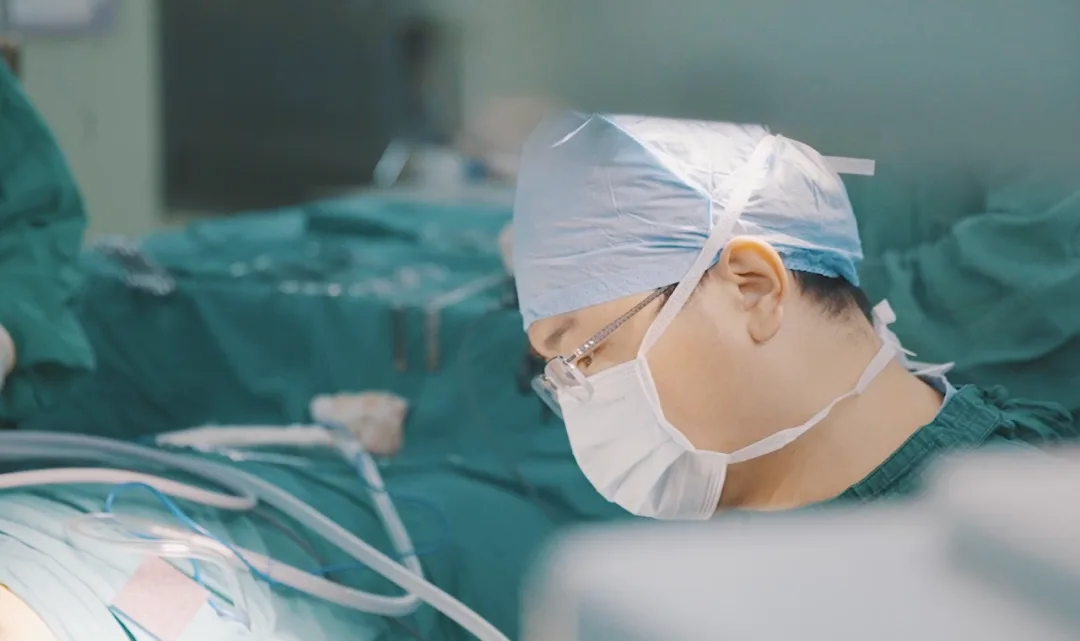
Scarless for as many patients as possible
"Surgery has come a very long way. But the problem history left with women has not been fully solved — the scar on the breast is still plainly visible. Being scarless should be a parallel option to being alive. That is why reverse-sequence endoscopic reconstruction exists."
Any new technique takes time to settle, Professor Du says, and from the start he wanted as many patients as possible to benefit from it. As the originator of reverse-sequence endoscopic breast surgery he did not keep it to himself: he travels the country teaching it. The technique will spread, and it will bring more women health, beauty and hope.
Read next
Stories are published with consent and with names changed. Every patient is different — your treatment plan is decided with your own surgeon.
Consult about a similar case