"Because My Patients Need Me"
Three hours in theatre, one patient through diagnosis and recovery, and the reason behind a surgeon who never seems to stop saying yes.
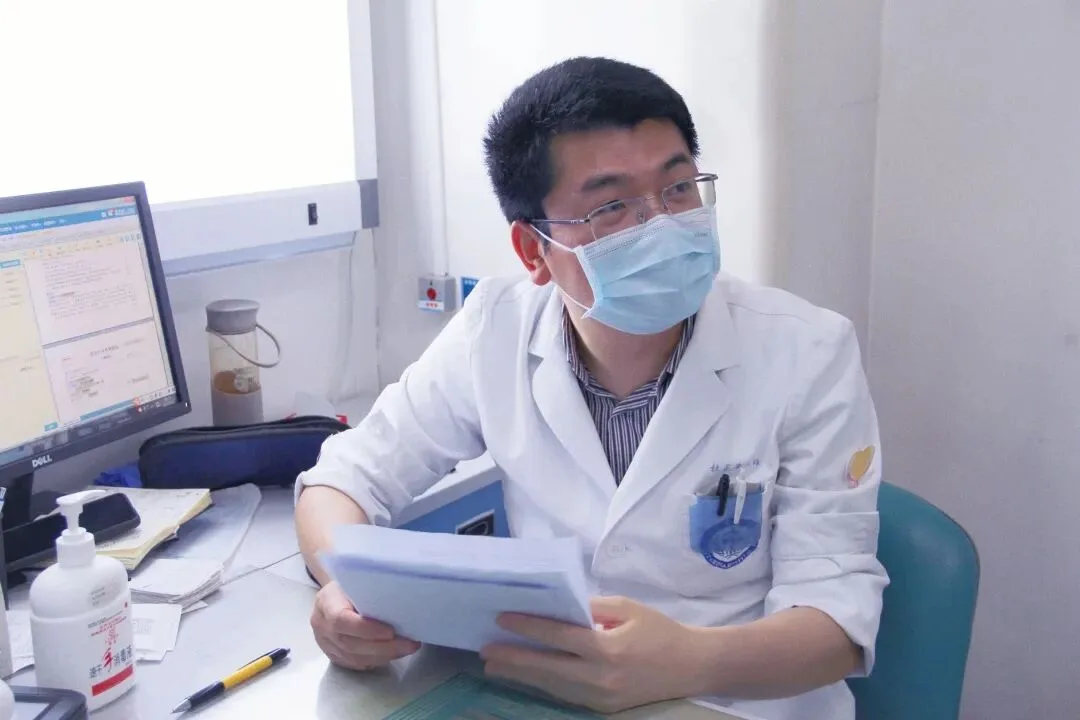
On 1 July Professor Du Zhenggui and his team completed an endoscopic reconstruction at West China Hospital's breast surgery department — three hours, and done. The operation used the transaxillary endoscopic approach: no scar on the breast, no complications, and far less physical and psychological burden for the patient. Endoscopic reconstruction is now the standard approach in the department.
A doctor who thinks the patient's thoughts
The patient, Yang, had noticed a hard area in her breast by chance. It turned out to be a lump, and she did not take it seriously. After a re-check following the May holiday she had a core biopsy: invasive breast cancer. After several detours she found Professor Du, who scheduled surgery as soon as he saw the results.
"I looked at her report — invasive breast cancer, with highly active cells, which carries a substantial risk of recurrence. That is not a good situation for a patient, so it needed to come out early, before the cells spread and pushed the risk higher."
Outside the consulting room the corridor was packed. To avoid interrupting his work we left — what stays in memory is a consulting room with warmth in it, and a takeaway meal that had gone cold.
Yang
"Professor Du is someone I look up to. When it happened I was at a loss the first time I went to West China Hospital, but he was kind and gentle, explained the surgical plan and the follow-up in detail, and even taught me the exercises that help recovery. Skill and ethics, a healer's heart — he is the benchmark."
What kind of commitment keeps a surgeon working almost every day of the year?
"Because my patients need me."
No hesitation in the answer. Entirely ordinary, and entirely remarkable — nothing added, and nothing more needed.
Reverse-sequence endoscopy: making "scarless" an option
"We have solved the physical disease but not the psychological injury — and that still counts as failure. A patient should not lose confidence because of how she looks."
Which is why Professor Du originated reverse-sequence endoscopy, West China Port 1 and West China Port 2. For the treatment of breast cancer this means not only less time in theatre but a refinement of technique: world-class cancer surgery that still takes appearance seriously — no scar, natural, symmetrical, beautiful. To date he has treated several thousand breast cancer patients with these techniques in West China Hospital's day-surgery unit.
Nothing this exact is reached in one step. The road was not smooth: repeated, tedious experiments after each failure; every moment done hands-on; the moon over West China late at night; the single light left on at home; persistence, commitment, and a thousand failures that built the technique of today.
Breast cancer is a nightmare for most people who hear the diagnosis. For Yang too:
Yang
"But Professor Du was there, and West China was there, and the nightmare ended when I woke up from the anaesthetic. It is over a month now and I have recovered well — no scar at all on the breast, the two sides are symmetrical, nothing in my life has been affected. If anything I am stronger."
She loves posting on WeChat Moments and playing mahjong; the Sichuan warmth comes through completely. Her confidence is visible from the outside, and you would not guess she has just been through cancer treatment. Several of her fellow patients have been sent his way. She says:
Yang
"Meeting Professor Du was very, very lucky."
The road, and what makes it worth it
In more than ten years of practice, the clinical mastery is matched by how he talks to patients.
Patient
"Doctor Du, given how I am recovering — can I pick up my child?"
Prof. Du
"The implant is in front of the pectoralis. You could go rock climbing."
Patient
"Doctor Du, will breast cancer come back or spread?"
Prof. Du
"Think of it this way. Cancer is like the arrival of COVID: Hubei province is the breast, and Wuhan is the lump growing in it. Most people think removing the lump solves it — one atomic bomb on Wuhan and the epidemic is over. It is not like that. What we actually need to know is whether the cancer cells have already left: during the Spring Festival so many people travelled home from Wuhan, they went all over the country. What use is taking out Wuhan? So whether it spreads depends on how active the cells are."
Patient
"Doctor Du, what is endoscopic surgery?"
Prof. Du
"Did you have steamed buns for breakfast? The breast is the bun. Endoscopic surgery makes a small opening at the pleat of the bun, puts a tube in, makes another opening in the armpit, comes at it from both directions, separates the filling from the wrapper, and takes the filling out."
The right amount of humour dissolves the tension in the room. But that is not enough on its own — what patients also hear is this:
- "Don't be afraid."
- "Relax. Rest well."
- "You'll go to sleep and the operation will be over. It's quick."
- "How do you feel today? Anything uncomfortable?"
These are the words patients hear after he finishes a fifth operation of the day and hurries across to the inpatient building. Before a weekend trip he still finds time to check how his patients are doing, then picks up his bag and laptop and heads for the train station.
West China at midnight is quiet, well matched to the moon. Professor Du walks quickly, and never stops — as though time has been wound tight on him, turning one day into two.
Where is the smooth road in medicine? Someone has to lay himself down as the road. Where is the ease in being a doctor? It is being far from your own family's hearth, so that other families can be together.
Read next
Stories are published with consent and with names changed. Every patient is different — your treatment plan is decided with your own surgeon.
Consult about a similar case