Does a Needle Biopsy Make Cancer Spread?
The four objections we hear in clinic every week — and what a biopsy needle actually does.
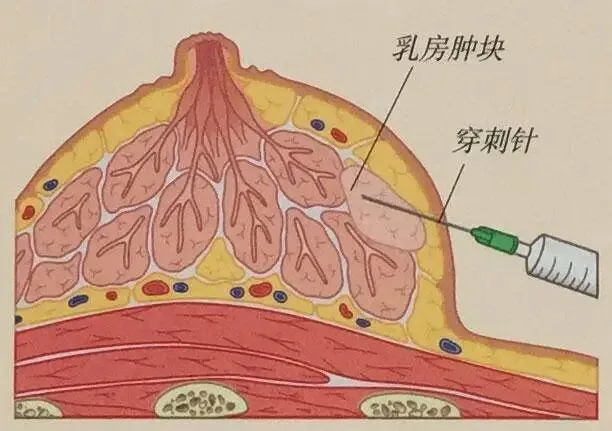
That a needle biopsy causes cancer cells to turn malignant — or spreads them through the body — is one of the most common fears in clinic, and it makes many patients hesitate. So what exactly is this test? Let us start at the beginning.
Four objections we hear in clinic almost every week:
- "A biopsy? Don't bother writing the order — I won't do it."
- "I already had an ultrasound. Just look at the ultrasound."
- "Whatever that form says, it says. Ordering a biopsy is just about making money, isn't it?"
- "I heard that everyone who gets a biopsy turns out to have cancer. It can't be good for you. If the needle spreads the cancer, who is responsible? I'm not doing it."
What a biopsy actually is
A needle biopsy (穿刺活检) is a way of sampling a lesion: once the lesion is located, a needle is inserted into the tissue and a small amount of tissue or fluid is drawn out and examined, so that the nature of the lesion can be determined.
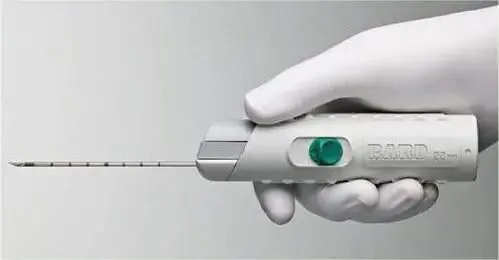
Biopsies of this kind include abdominal, thoracic, lumbar, joint-cavity and kidney puncture, as well as core needle biopsy of superficial lumps.
Does it cause cancer, or spread it?
This is the question everyone asks. The answer: a needle biopsy does not usually cause cells to become malignant, and there is no basis for saying it accelerates the spread of cancer. Three reasons:
- The needle is chosen to match the lump. For a small lump the surgeon uses a smaller gauge, so the trauma to normal tissue and to the tumour is minimal.
- The procedure takes very little time. Once the result is back, treatment follows quickly — surgery, chemotherapy or radiotherapy — so the cancer cells have almost no time or space to spread.
- The needle path must avoid large blood vessels, so the feared "cancer cells entering the bloodstream" does not happen.
A needle biopsy therefore does not cause cells to become malignant and does not accelerate the spread of cancer. What it does do is sharply reduce the chance of a missed or mistaken diagnosis, and give the treatment that follows a solid basis — which is why it matters so much in the diagnostic pathway.
Read next
The articles above are general health education, not a substitute for professional medical advice. Decisions about your own treatment belong with your surgeon. Patient names are as published in the hospital's original articles.
Contact our team