Treated Before It Turned: Atypical Hyperplasia and Endoscopic Reconstruction
A patient with severe atypical hyperplasia — a pre-cancerous lesion — had the gland removed through an armpit incision and both breasts rebuilt in the same operation. What "pre-cancerous" actually means.
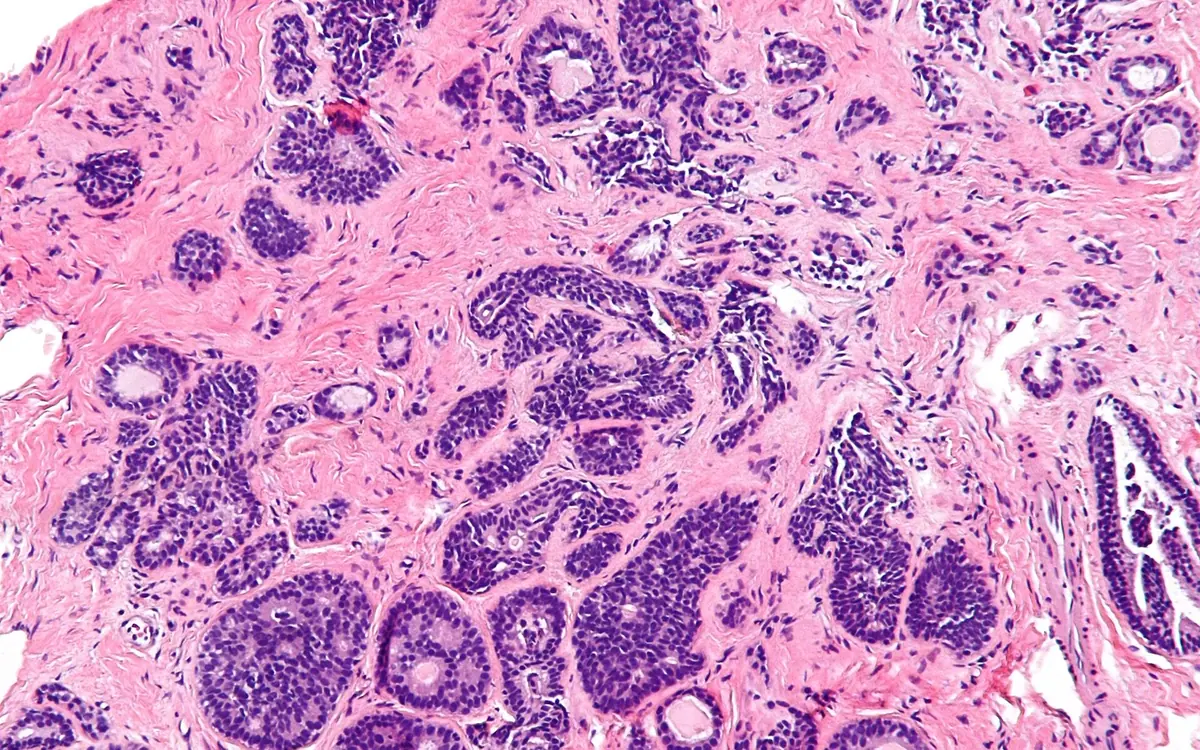
In early December, the breast surgery department at West China Hospital admitted a patient with severe atypical hyperplasia of the right breast — a pre-cancerous lesion — together with atypical hyperplasia on the left. With that diagnosis in hand, Professor Du Zhenggui's team met immediately to decide on treatment. On the 15th she underwent endoscopic subcutaneous mastectomy on the right with bilateral implant reconstruction. The pre-cancerous lesion was treated, there is no scar on the breast, and the natural contour was restored.
Not the "atypical" you are thinking of
The term here is atypical hyperplasia (also called ductal or lobular atypia): a transitional stage between ordinary benign breast change and breast cancer. In this stage the duct lining or epithelial cells have begun to change in character, which distinguishes them from normal proliferative change — and the risk of malignant transformation is higher. Atypical hyperplasia is one of the routes by which benign breast disease becomes cancer. It progresses through three stages; the first two can be halted by removing the cause, but left alone it can end in breast cancer.
- Normal duct
- Hyperplasia
- Atypical hyperplasia
- Ductal carcinoma in situ
- Invasive cancer
Is atypical hyperplasia cancer?
The path from a normal cell to a tumour cell runs: normal → hyperplasia → atypical hyperplasia → carcinoma in situ → invasive carcinoma. Atypical hyperplasia sits at the middle station between benign and malignant, which is why medicine calls it a "pre-cancerous lesion".
That does not mean it will inevitably become cancer. Women with atypical hyperplasia of the lobules or duct epithelium are roughly ten-odd times more likely to develop breast cancer than women without it — but when it is found and actively treated and monitored, many cases stop progressing and return to normal. It deserves attention, not panic.
How is it found?
Atypical hyperplasia usually causes no symptoms at all. Once symptoms appear, the lesion may already have progressed. The most accurate way to detect it is a pathological biopsy — routine physical examination and other ancillary tests cannot give reliable evidence, and in practice few patients can predict it from anything they notice themselves.
How is it treated?
- Surgery. Biopsy remains the gold standard for pathological diagnosis. Even when atypical hyperplasia is diagnosed, there is a residual risk that a cancer has been underestimated, and surgery removes the lesion completely — stopping its further development while the ducts are still free of cancer. This patient was already at the pre-cancerous stage, so removing the gland reduces the risk of recurrence as far as possible; the endoscopic reconstruction performed by Professor Du restored the breast contour and achieved a near-perfect visual result at the same time.
- Chemoprevention. Where it is indicated, targeted preventive medication is given on medical advice.
- Self-monitoring. Breast self-examination, clinical examination and mammography, plus emotional balance, good diet and sleep habits and general wellbeing all play a part in prevention. See a doctor as soon as something is noticed, trust the assessment, and follow treatment — that is what prevents progression.
Many women also find out during a check-up that they have ordinary breast hyperplasia. Uncomplicated hyperplasia does not need treatment: it usually settles with better habits, and regular follow-up is enough.
As standards of care improve, patients with conditions like atypical hyperplasia are far from rare. Professor Du's team continues to refine the endoscopic technique they pioneered; it will help more patients return to ordinary life with both their confidence and their appearance intact.
Read next
Stories are published with consent and with names changed. Every patient is different — your treatment plan is decided with your own surgeon.
Consult about a similar case